
There’s $8.5 billion flooding into world model startups right now, and I’m convinced most of it is going to evaporate. Not because world models aren’t important they absolutely are. But because the field has fractured into mutually exclusive philosophical camps, and only one camp can be right.
This isn’t like the LLM wars where multiple approaches (decoder-only, encoder-decoder, sparse MoE) could coexist. World models are winner-take-all. Either Yann LeCun is right that generative AI is a dead end, or everyone else is right that he’s fighting yesterday’s war. There’s no middle ground.
Let me tell you who I think wins, who loses, and why the conventional wisdom is probably wrong.
The Brutal Truth: LeCun Is Either a Genius or Building a $3.5B Monument to Stubbornness
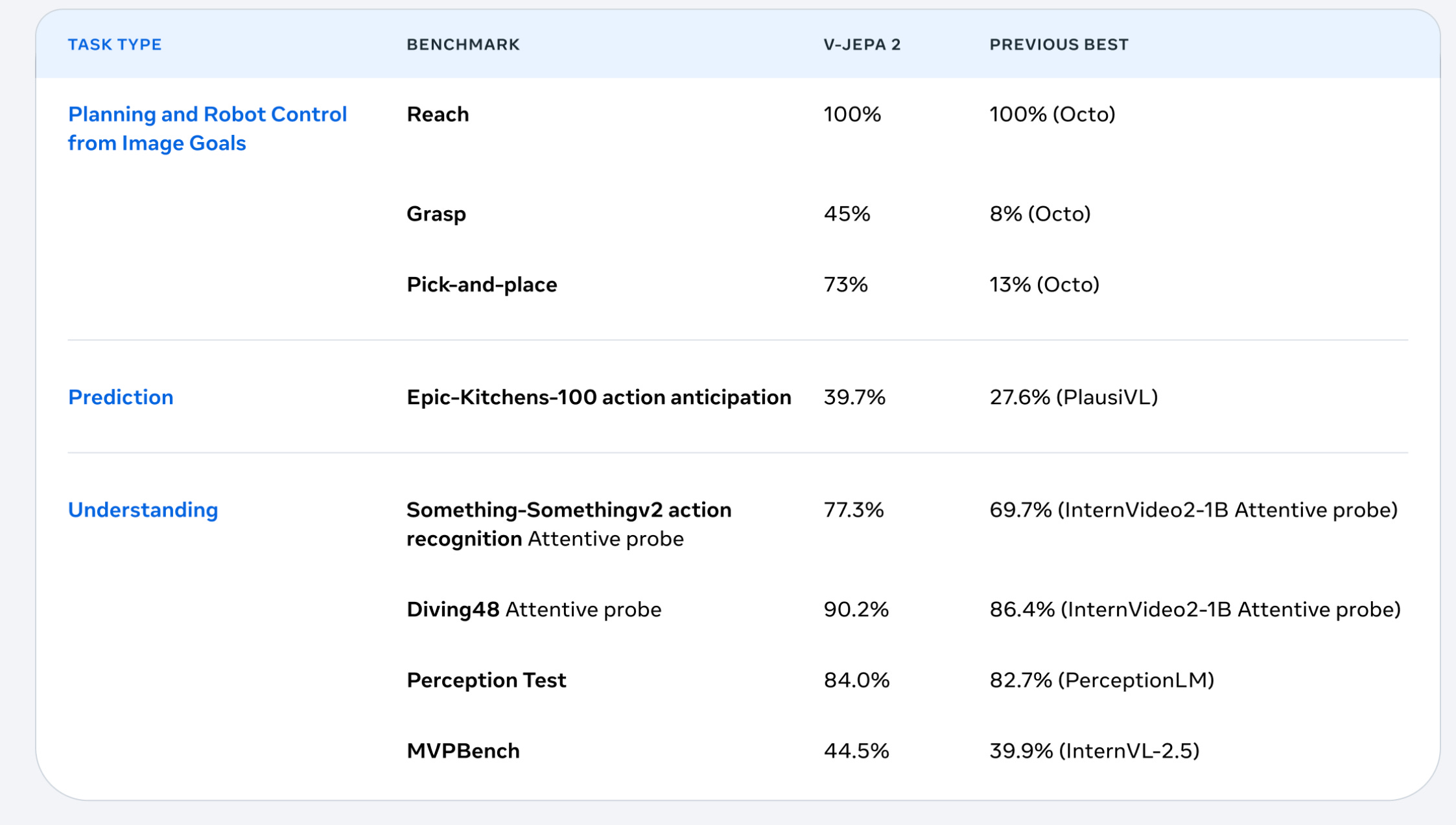
AMI Labs is the most fascinating and terrifying bet in this entire space. LeCun is raising $586 million at a $3.5 billion valuation for a company with no product based on an architecture (JEPA) that explicitly rejects everything everyone else is doing.
His thesis: LLMs are fundamentally incapable of human-level intelligence because they only manipulate text. The future belongs to models that learn abstract representations of the physical world from video, not models that generate pretty pixels.
If he’s right, AMI leapfrogs everyone and we’ll look back at 2025 as the year we wasted billions on generative world models that couldn’t scale. The entire Genie/Runway/World Labs cohort becomes the equivalent of GANs after diffusion models arrived.
If he’s wrong, we get the most expensive AI research project that never shipped a product since IBM Watson. And honestly? The pre-product $3.5B valuation is insane even by 2025 standards. This is pure bet-on-the-jockey stuff, and LeCun’s jockey credentials are impeccable but his track record on predictions is... mixed.
My take: LeCun is 60% right. JEPA will work for industrial applications (jet engines, manufacturing, robotics) where you need genuine physics understanding. But he’s wrong that generative approaches can’t achieve understanding — they just achieve it differently. Both will exist, serving different markets.
The problem with AMI isn’t the technology, it’s the business model. You can’t build a consumer-facing product company on JEPA. You need to be an enterprise infrastructure play from day one. If LeCun tries to compete with DeepMind on generalist AI benchmarks instead of owning the “industrial world modeling” category, AMI burns through $600M and becomes a cautionary tale.
World Labs’ Dirty Secret: Exportable Assets Are a Bridge, Not a Destination
Fei-Fei Li’s spatial intelligence framing is brilliant marketing, and Marble’s exportable 3D assets are genuinely useful right now. Game developers and VFX artists need Gaussian splats they can import into Unity. That’s a real, immediate market.
But here’s the problem: exportable assets are a workaround for insufficient real-time consistency, not a long-term architectural advantage.
In 2027, when Genie 4 and Runway GWM-2 can maintain spatial consistency for 30-minute sessions, why would anyone want static exported environments instead of infinite procedurally generated ones? The whole “downloadable 3D world” value prop collapses the moment streaming video achieves persistence.
World Labs is essentially selling cassette tapes in 2005. They’re better than what came before (MD players? DVDs?), and there’s definitely a transition period where professionals need them. But streaming is coming, and when it arrives, the cassette business evaporates.
My prediction: World Labs gets acquired by Unity or Epic within 18 months for $800M-$1.2B. Fei-Fei Li gets her exit, early employees get rich, the acquirer integrates Marble into their asset pipeline... and by 2028, the whole “exportable world model” category is a footnote.

The only way World Labs survives independently is if they pivot hard into being a robotics simulation company (where persistent environments genuinely matter) and abandon the creative tools positioning. But that puts them in direct competition with Genesis AI, which is already further ahead on physics simulation.
The Inconvenient Truth About Gaming Data: General Intuition’s Moat Might Be a Mirage
Everyone is salivating over General Intuition’s 2 billion gaming videos per year from Medal’s user base. OpenAI reportedly offered $500M for Medal. Khosla Ventures led a $133.7M seed. The data moat narrative is irresistible.
But here’s what nobody wants to say: gaming environments are fundamentally different from physical reality in ways that might not transfer.
Games are discrete state machines with deterministic physics engines. The real world is continuous, stochastic, and messy. A model that learns to predict Fortnite or Call of Duty might be learning “how game engines work,” not “how physics works.”
Tesla has billions of miles of real-world driving data. Wayve has multi-continent real-world manipulation data. Lightwheel is collecting egocentric human demonstrations across diverse physical environments. Those are real physics. Gaming videos are simulated physics.
Yes, the diversity across thousands of games is valuable. Yes, first-person gaming teaches spatial reasoning. But I’m deeply skeptical that a model trained primarily on Unreal Engine physics will transfer to, say, predicting how fabric drapes or how liquids pour or how materials deform.
My bet: General Intuition’s gaming data is a huge advantage for game AI applications (NPC behavior, procedural level generation, game testing) but a limited advantage for robotics. They’ll do incredibly well in the gaming industry and struggle to break into physical AI. The OpenAI acquisition interest was about getting a foothold in gaming, not about robotics data.
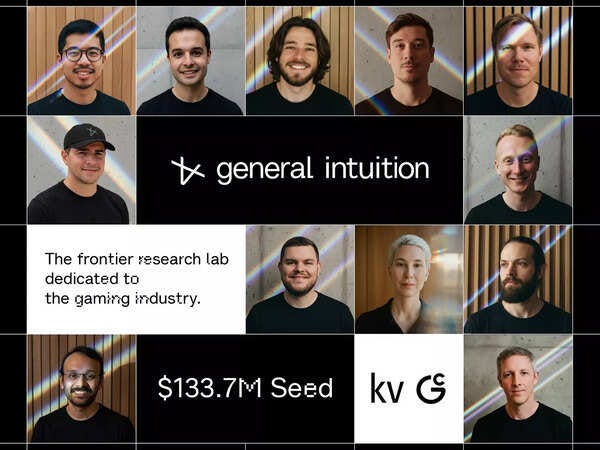
If I’m right, General Intuition becomes a gaming industry infrastructure play valued at $3-5B by 2027, but never becomes the robotics foundation model they’re positioning toward.
DeepMind Already Won (They Just Haven’t Declared Victory Yet)
Let’s be honest about what’s happening with Genie 3:
It’s built on the research infrastructure that produced AlphaGo, AlphaFold, and Gemini
It has a unique agent-world model co-training loop with SIMA that creates a compounding advantage
It’s being used by Waymo for real autonomous driving validation
It’s available to consumers via Google AI subscriptions
DeepMind can burn $500M/year on research without blinking
Every startup in this space is competing with Google DeepMind’s ability to hire the top 50 researchers in the field, give them infinite compute, and let them iterate for five years. The only reason startups have a window is DeepMind’s historically slow commercialization.
But here’s the thing: DeepMind doesn’t need to commercialize fast anymore. Google’s actual strategy is to embed Genie into:
Waymo (autonomous driving validation)
YouTube (interactive video)
Google Cloud (robotics simulation as a service)
Android (on-device spatial intelligence for AR glasses)
They’re not trying to build a standalone world model business. They’re trying to make world models a horizontal capability across all of Alphabet. And if you’re a startup trying to sell world models as a service, you’re about to get steamrolled by Google Cloud offering Genie API access at 1/10th your price.
Runway Is Playing a Different Game (And Winning It)
Runway is the only company in this space that’s actually making money from world models. Gen-4.5 topped the video leaderboard. GWM-1 is a natural extension. They have paying customers, proven GTM, and a product roadmap that makes sense.
The secret to Runway’s success: they’re not trying to solve AGI, they’re trying to sell tools to creative professionals.
GWM-Worlds isn’t competing with Genie 3 for “best general world model.” It’s competing with Adobe After Effects for “best tool to generate background environments for my short film.” That’s a $20B/year market that exists today, not a hypothetical future market.
The three-variant strategy (Worlds, Robotics, Avatars) is smart because each variant addresses a specific customer with a specific budget and specific evaluation criteria. They’re not asking “is this AGI?” They’re asking “does this save a VFX artist 40 hours of work?”

My prediction: Runway goes public in 2027 at a $15-20B valuation on the back of actual revenue from creative professionals. They become the Adobe of AI generation. GWM-1 is a product feature, not their whole business, which means they’re insulated when DeepMind commoditizes world model APIs.
The Physics Engine Companies Are Dark Horses
Nobody is talking about Genesis AI and Saturn Dynamics the way they should be. Both are building physics-first simulation engines, not pixel-first video generators.
This matters because robotics doesn’t need pretty videos, it needs accurate physics. A model that can predict how objects bounce, deform, collide, and interact is infinitely more valuable for robot training than a model that generates photorealistic video that violates physics.
Genesis AI’s proprietary physics engine, if it’s actually better than NVIDIA Isaac Sim (and their benchmarking suggests it might be), is a genuine moat. You can’t fake fundamental physics simulation quality the way you can fake video quality.

Saturn Dynamics is even more interesting because they’re explicitly building a “generalist AI physics engine” with flexible tokenization that trades off spatial vs. temporal compression. That architectural choice suggests they deeply understand the robotics use case in ways the video generation companies don’t.
My hot take: By 2028, the world model winners will be split into two completely separate categories:
Video generation (Runway, maybe Odyssey) serving entertainment/creative industries
Physics simulation (Genesis AI, maybe Saturn) serving robotics/industrial applications
The companies trying to straddle both (World Labs, Genie 3) will have to pick a lane. Physics and aesthetics are different optimization targets, and you can’t be best-in-class at both.
Driving World Models: Three Approaches, One Winner
Waymo World Model is the most technically sophisticated (multi-modal lidar+camera generation), but it only matters if Waymo wins autonomous driving. Which they might! But if Aurora or Zoox wins instead, that technical sophistication was useless.
Tesla has unmatched data (billions of miles) but zero technical transparency and questionable physics fidelity. Tesla’s end-to-end neural network approach is either genius or a dead end, and we won’t know which until FSD v16+ either achieves L4 or hits a wall.
Wayve GAIA-3 is the dark horse. They’re the only pure-play driving world model company, they’ve raised $1.05B, they have a real automotive partner (Nissan), and their evaluation-first approach (using world models for safety validation, not just training) is the most pragmatic.
My bet: Wayve gets acquired by a major automaker (Toyota, VW Group, or Mercedes) for $3-5B within two years. The acquirer realizes that owning the best driving world model is more strategically important than owning a full self-driving stack, because the world model becomes the evaluation framework for any autonomous driving approach.
Project Prometheus: Bezos’ Bet on the Physical Economy
$6.2 billion. Jeff Bezos as co-CEO. A hundred researchers from Meta, OpenAI, and DeepMind. Zero public information.
The “AI for the physical economy” framing (computers, aerospace, automobiles) positions Prometheus completely outside the consumer/entertainment/robotics world model race. They’re building something for Boeing and Intel, not for game developers or robot startups.
This is the biggest wildcard in the entire landscape. If Prometheus is building foundation models that simulate materials science, fluid dynamics, electromagnetic fields, and structural mechanics at industrial scale, they could become the Bloomberg Terminal of physical engineering — a $50B+ company that nobody outside the industry knows exists.
Prometheus becomes the AWS of industrial simulation. They don’t compete with World Labs or Runway at all. They compete with Ansys, Dassault Systèmes, and Siemens PLM. And they win because AI-native simulation is 1000x faster than traditional FEA/CFD.
But if they’re just building “better robotics simulation” or “manufacturing digital twins,” they’re overfunded by $5B and will burn spectacularly.
The Uncomfortable Conclusion
Here’s my portfolio of predictions:
Will Succeed (>$5B outcomes):
Runway (public company, AI creative tools platform)
DeepMind Genie (embedded across Alphabet, becomes horizontal capability)
Wayve (acquired by automaker for $3-5B)
Genesis AI (independent robotics platform, $5-10B valuation by 2028)
Maybe Prometheus (if the industrial thesis is right)
Will Survive (acquired or niche):
World Labs (acquired by Unity/Epic for $1B+)
Odyssey (acquired by Disney/Netflix for interactive entertainment)
General Intuition (becomes gaming industry infrastructure, $3-5B valuation)
Lightwheel (picks-and-shovels position, steady infrastructure business)
Will Struggle:
AMI Labs (if they try to be generalist AI instead of industrial AI)
Saturn Dynamics (too early, will be acqui-hired)
Rhoda AI (humanoid robotics is 10+ years from product-market fit)
Total invested: ~$8.5 billion Total returned: ~$30-40 billion (if I’m right about the winners) Winners captured: Top 3 companies get 80% of the value
That’s a 4-5x return on the category, which sounds good until you realize that:
70% of the companies fail or get acqui-hired
The returns are wildly concentrated in Runway, DeepMind, and maybe Genesis
LPs who spread bets across the category would have been better off just buying Alphabet and Runway secondaries
The Real Question: Does Any of This Matter for AGI?
DeepMind says world models are “a key stepping stone on the path to AGI.” LeCun says LLMs will never achieve human-level intelligence without world models. Everyone is framing this as existentially important.
But here’s what I actually believe: World models matter enormously for robotics, autonomous systems, and physical AI. They matter moderately for creative tools and gaming. They probably don’t matter at all for AGI.
The surprise of the LLM era was that you could get shockingly far with pure text prediction. GPT-4 can reason, plan, and even do some spatial reasoning without ever seeing a single pixel of video. It turns out language is a much richer training signal than we thought.
I suspect the path to AGI goes through massive multimodal transformers (text + images + video + audio + sensor data) that learn implicit world models as emergent capabilities, not through explicit world model architectures.
In which case, all of this the $8.5B, the philosophical debates, the JEPA vs. generative wars is building incredibly valuable tools for robotics and simulation, but not the path to AGI at all.
And honestly? That’s fine. We need better robotics. We need better simulation. We need better creative tools. World models deliver all of that.
We just shouldn’t confuse “incredibly valuable technology that will create $100B+ in market cap” with “the key to artificial general intelligence.”
Those might be two different things.
References & Further Reading
Company Websites & Product Pages:
World Labs - Marble product launch
AMI Labs - Yann LeCun’s JEPA-based venture
Genesis AI - Open-source physics engine
Odyssey - Interactive video platform
Runway - Gen-4.5 and GWM-1
Wayve - GAIA-3 world model
General Intuition - Gaming data approach
Saturn Dynamics - Saturn Alpha
Technical Blogs & Research:
Fei-Fei Li’s “From Words to Worlds” manifesto - Spatial intelligence thesis
World Labs RTFM announcement - Real-time foundation model
Yann LeCun MIT Technology Review interview - JEPA philosophy and AMI vision
Odyssey: Introducing Interactive Video - World model architecture
Runway’s General World Models research - GWM-1 technical details
Google DeepMind Genie 3 announcement - AGI stepping stone framing
Wayve GAIA-3 technical blog - Evaluation-first approach
Waymo World Model announcement - Multi-modal lidar generation
Genesis AI benchmarking report - Physics engine comparisons
Saturn Dynamics Alpha announcement - Flexible tokenization architecture
Funding & Business News:
Academic & Research Context:
JEPA (Joint Embedding Predictive Architecture) paper - LeCun’s core thesis
Genie 1 research paper - Original 2D world model
Lightwheel RoboFinals platform - Evaluation infrastructure
Industry Analysis:
The Moravec Paradox and World Models - Why perception remains hard
NVIDIA Isaac Sim - Industry standard simulation
Medal platform - General Intuition’s data source
What do you think? Am I wrong about LeCun? Is World Labs more defensible than I’m giving them credit for? Are physics engines the real dark horse? Drop your takes in the comments.